Why Inclusion Is a Business Imperative
Let me take you back to 1987.
When Paul O’Neill became CEO of Alcoa, he shocked analysts by declaring:
“My first and only priority is worker safety.”
He added that if he did not hear about serious incidents within 24 hours, managers would be held accountable.
Analysts were skeptical. Some thought he didn’t understand business. But O’Neill was playing a deeper game. He chose a universal goal everyone could align around: human safety.
And that focus did something unexpected: It opened the door to employee voice; It encouraged people to speak up; It pushed process improvements and transparency.
What looked like a safety initiative became a cultural transformation: Productivity rose. Quality improved. Profits followed.
Employee safety turned out to be the unspoken lever for innovation and company performance.
The real shift? He built psychological safety before the term was popular.
Inclusion Unlocks Performance
Inclusion Unlocks Performance
Back in 1987, psychological safety and inclusion were far from boardroom priorities.
Today, we understand something more clearly: Psychological safety does not happen by accident. It is built through inclusion.
Belonging happens when people:
- feel valued
- trust fairness
- can speak up
- show up as themselves
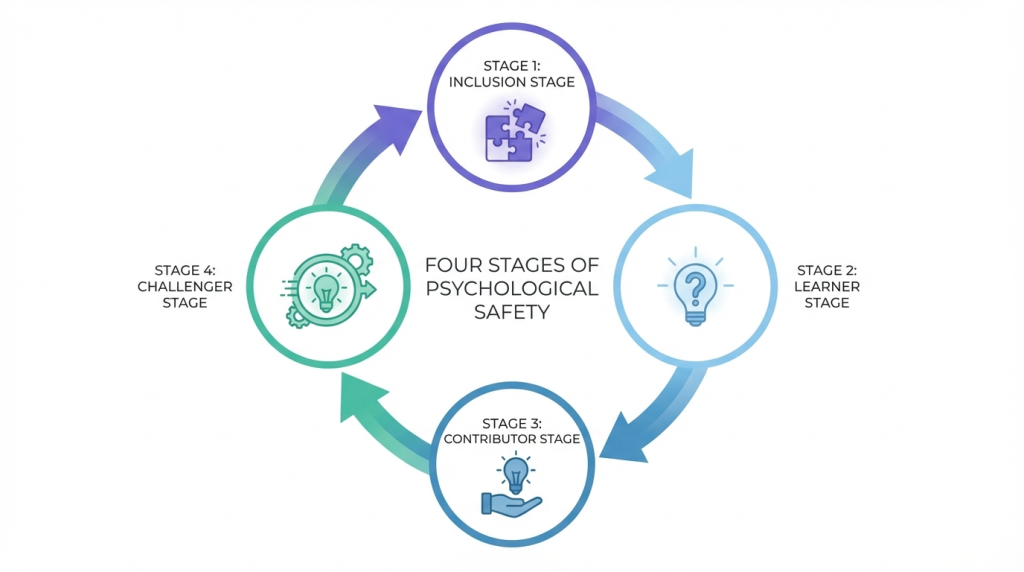
This is the foundation of psychological safety. And psychological safety fuels innovation, engagement, and resilience.
Here is the critical link: Without inclusion, it is nearly impossible to build that safety.
Inclusion Is Today’s Secret Code
If safety was the hidden lever of performance in 1987, inclusion is the hidden code today.
Diversity, Equity, and Inclusion are no longer side initiatives. They are pillars of sustainability and long-term performance.
Why?
Because inclusion shapes better decisions, broader perspectives, and longer-term thinking.
Research increasingly shows that gender-diverse leadership is not only socially meaningful but also environmentally impactful. For example, studies indicate that a 1% increase in female leadership is associated with a 0.5% reduction in CO₂ emissions.
Inclusion influences priorities. It expands what leaders notice. It improves how organizations adapt.
Belonging is not soft. Belonging is strategic.
Just as safety once unlocked performance, inclusion now does.
Playing the Long Game
In The Infinite Game, Simon Sinek describes “infinite players” as those working toward a just cause — a purpose bigger than any single leader or quarterly result, inclusive by nature, and designed to endure.
Inclusion work fits this definition perfectly.
It is not a program.
It is not a trend.
It is not a PR exercise.
It is infrastructure for sustainable success.
When people feel included, they contribute more. When they contribute more, organizations grow. And when organizations grow responsibly, societies benefit.
If “safety” transformed organizations in 1987, “inclusion” can transform them today.
Because inclusion ultimately determines who gets to participate in — and who gets to shape — the future.
From Insight to Collective Action
This is exactly why my work — and my heart — sits at the intersection of inclusion, belonging, and collective action.
Because inclusion is not only an organizational strategy. It is a societal multiplier.
When one woman advances, a family moves forward.
When many women advance, economies grow.
When systems become inclusive, futures expand.
At TurkishWIN, we see this every day. Through mentoring, storytelling, and community, we witness how belonging transforms confidence, how confidence transforms participation, and how participation transforms impact.
Inclusion is not built alone. It is co-created. It grows when people choose to open doors, share networks, amplify voices, and lift as they rise.
If safety was the hidden lever of performance in 1987, inclusion is the collective lever of progress today. And the real opportunity ahead of us is this: To design ecosystems where more people feel they belong, more voices shape decisions, and more leaders emerge from unexpected places. Because the future of performance is not only about what organizations achieve.
It is about who gets to achieve it together. And that is a future worth building — collectively.